10 Tour Management Best Practices Every Tour Manager Should Know
From crew coordination to day-of logistics, here are the essential best practices that separate good tour managers from great ones.

tour-flow Team
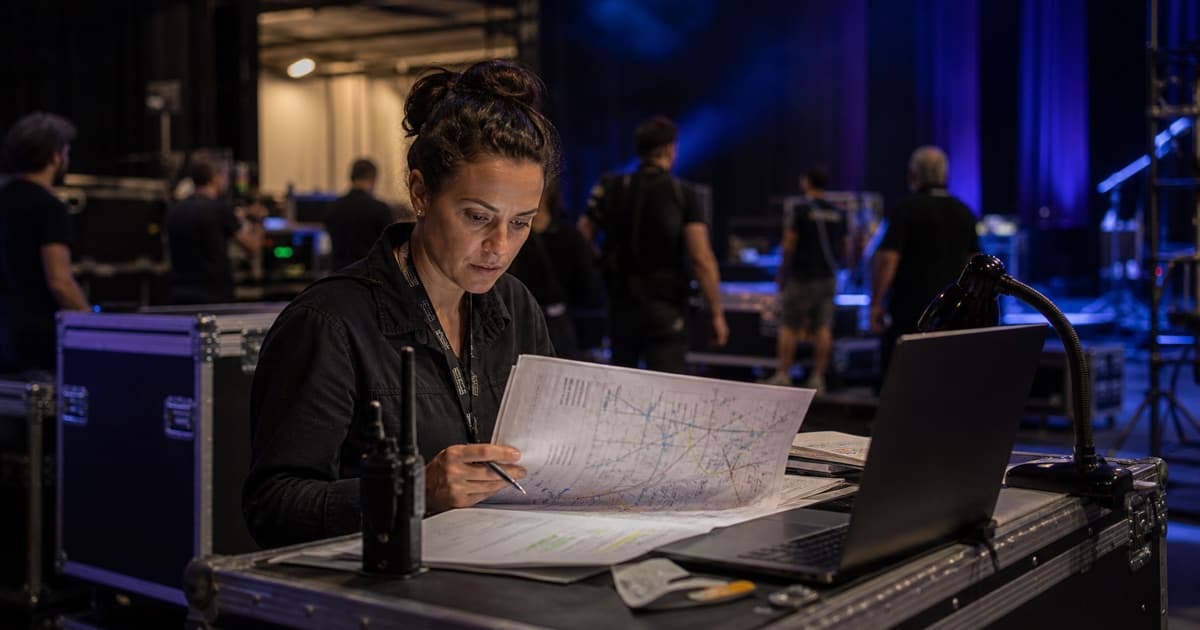
Managing a successful tour is part logistics, part diplomacy, and part controlled chaos. Whether you're taking an emerging act on their first headline run or coordinating a 50-date arena tour, these best practices will keep your operation tight and your team sane.
1. Build Everything from Templates
The number one time-saver in tour management is never starting from scratch. Create reusable templates for:
- Crew lists with standard positions, categories, and contact fields
- Production sheets covering sound, lighting, stage, and backline specs
- Day sheets with your preferred schedule format and information blocks
- Advance forms with the questions you always need answered
When a new event gets added to the routing, it should inherit your tour-level templates automatically. You customize from there — not from zero.
2. Centralize Your Information
The biggest enemy of a smooth tour is scattered information. When your crew list lives in one spreadsheet, your hotel confirmations in email, your production specs in a PDF, and your schedule in a group chat — things get missed.
Every piece of tour data should live in one place that everyone on the team can access. One source of truth eliminates the "which version is correct?" problem that plagues most touring operations.
3. Advance Shows Thoroughly — and Early
Great advancing is the foundation of great shows. Start your advance process at least 2-3 weeks before the date, and cover:
- Venue specs: Stage dimensions, power, load-in access, curfew
- Local crew: Stagehands, runners, security requirements
- Hospitality: Catering, dressing rooms, showers, laundry
- Logistics: Parking for trucks/buses, nearby hotels, hospital locations
- Settlement: Guarantee structures, merch percentages, ticket counts
Document everything in a structured format. Your future self (and your crew) will thank you.
4. Communicate the Schedule Clearly
A well-structured day sheet is your most important communication tool. Every person on the tour should know:
- What time they need to be where
- What's happening and in what order
- Who to contact for specific needs
- Where the venue, hotel, and key locations are
Send the day sheet the night before. Update it if things change. Make it accessible from mobile devices. A crew that knows the plan is a crew that executes the plan.
5. Manage Your Crew Like a Team, Not a Workforce
Touring is physically and mentally demanding. The best tour managers:
- Protect rest time — enforce hotel check-in times and reasonable call times
- Communicate changes early — nobody likes surprises at 6 AM
- Acknowledge good work — a simple "great show tonight" goes a long way
- Handle conflicts quickly — small issues on a bus become big issues by week three
- Know dietary needs and allergies — it sounds basic, but it matters enormously
Happy crews perform better. Period.
6. Track Everything in Real Time
Don't wait until the end of the tour to figure out where things went wrong. Track:
- Budget vs. actuals for every show
- Crew hours and per diems
- Equipment issues and repairs
- Venue notes for future routing
- Merch inventory and sales
Real-time tracking lets you catch problems early and make adjustments before they become expensive.
7. Have a Backup Plan for Everything
In touring, if it can go wrong, it eventually will. Prepare for:
- Equipment failure: Know your rental contacts in every city
- Travel disruptions: Have alternative routing for bus breakdowns or flight cancellations
- Personnel issues: Know who can cover which positions in an emergency
- Weather: Outdoor shows need rain plans, extreme heat protocols, and cancellation thresholds
The goal isn't to prevent every problem — it's to have a response ready when problems happen.
8. Document and Share Institutional Knowledge
Every tour generates insights that are valuable for the next one:
- Which venues have tricky load-ins
- Which promoters are great (and which need extra attention)
- What production tweaks improved the show
- Which hotels are tour-friendly
- What routing patterns work best in specific regions
Capture these notes in a system where they persist beyond a single tour cycle. Your organization's collective experience is one of its most valuable assets.
9. Embrace Digital Tools — But Keep It Simple
The best tool is the one your team actually uses. When evaluating tour management software:
- Mobile-first: Your crew is on the move, not at desks
- Offline-capable: Venues don't always have great WiFi
- Role-appropriate: Not everyone needs to see everything
- Fast to update: If it takes 10 minutes to update a schedule, people won't do it
Technology should reduce friction, not add it. If your digital tools create more work than they save, something's wrong.
10. Debrief After Every Tour
Schedule a proper debrief within a week of the last show. Cover:
- What worked well and should be repeated
- What problems occurred and how to prevent them
- What processes need to change
- What tools or resources were missing
- What feedback came from the crew, the artist, and the venues
The debrief is where good tour managers become great ones. It's where institutional knowledge gets created and where next tour's improvements get planned.
Put These Practices to Work in tour-flow
tour-flow connects reusable templates, events, crew coordination, day sheets, travel, documents, booklets, finances, and real-time updates. That gives managers one operational system in which these practices can be repeated across every date instead of rebuilt in disconnected files.
Turn good processes into a workflow the whole team can follow. Start managing your next tour with tour-flow
More Articles
Crew Coordination on Tour: How to Keep 30 People in Sync
Managing a touring crew means juggling schedules, contacts, roles, and communication across cities. Here's how to do it without losing your mind.
February 5, 2026
The Anatomy of a Perfect Day Sheet
A great day sheet is the difference between a smooth show day and total chaos. Here's exactly what to include and how to structure it.
February 10, 2026